In “Beyond the Disease” MitoWorld partners with the United Mitochondrial Disease Foundation (UMDF) to highlight advances in mitochondrial science and the people responsible for them. www.MitoWorld.org is devoted to better public and medical understanding of underlying mitochondrial science in an effort to raise awareness of the field in order to attract greater funding for the pursuit of mitochondrial disease and dysfunction.
In Mitochondrial Microscopist Dane Wolf Launches MitoGraphica, MitoWorld organizer Gordon Freedman interviews Wolf, a UCLA PhD and EMBO Fellow, about his specialty and passion: capturing mitochondria in vivid detail to enhance and support cutting edge mitochondrial research.
In Mechanisms of Mitochondrial DNA Mutation and Repair, MitoWorld’s Gordon Freedman writes about and gathers comments on the first-ever mitochondrial DNA (mtDNA) conference, which he attended, saying how useful it was to concentrate just on issues of mtDNA, heteroplasmy and copy number.
In MitoWorld Spotlight Video Interview with Dr. Craig Thompson, MitoWorld’s Gordon Freedman shares a video of Dr. Thompson’s (Memorial Sloan-Kettering Cancer Center) detailed analysis of a new type of mitochondria devoted to building cell structures, not just producing ATP.
In Funding Mitochondrial Transplantation for Regenerative Medicine, MitoWorld’s Gordon Freedman writes about the new Canadian government funding for mitochondrial transplantation for regenerative medicine and interviews Ana Andreazza, PhD, professor of pharmacology and toxicology at the University of Toronto, who leads the new ground-breaking effort.
In “Cryptic” Mutations in Mitochondrial DNA Correlate with Aging, MitoWorld’s Gary Howard reports on a team paper led Nick Jones at Imperial College London that explores the relationship between mutations in mitochondrial DNA and aging and interviews the lead authors.
In “Beyond the Disease” MitoWorld partners with the United Mitochondrial Disease Foundation (UMDF) to highlight advances in mitochondrial science and the people responsible for them. www.MitoWorld.org is devoted to better public and medical understanding of underlying mitochondrial science in an effort to raise awareness of the field in order to attract greater funding for the pursuit of mitochondrial disease and dysfunction.
In an Interview with Johnatan Brestoff, MitoWorld organizer Gordon Freedman, queries Jonathan Brestoff, MD, PhD, MPH, associate professor of pathology & immunology at Washington University School of Medicine in St. Louis. We asked Dr. Brestoff to explain his work and what is being organized from the Scientific and Medical Community session at UMDF (United Mitochondrial Disease Foundation).
In Innate Immune System Dysfunction in Mitochondrial Diseases, MitoWorld editor Gary Howard summarizes a new paper from Dr. Philip West at The Jackson Laboratory and published in Nature Communication. The paper describes hyperactivity of the innate immune system in a model of mitochondrial disease and identifies potential therapeutic targets for those diseases.
In Mitochondrial Disease and Endocrine Function, MitoWorld editor Gary Howard summarizes a new paper from Drs. Rachel Varughese and Shamima Rahman of University College London and published in Endocrine Reviews. The paper describes the effects of primary mitochondrial disease on the endocrine system and how these diseases can be diagnosed and treated.
In a Special Issue: Cell Biology of Mitochondria, MitoWorld organizer Gordon Freedman summaries the masterful compendium of articles, papers, reviews, interviews and opinion pieces just released in The Journal of Cell Science: Cell Biology of Mitochondria. There is reading here for weeks in the most comprehensive view of the rising field of mitochondria biology aimed at understanding dynamics, basic science, health and disease from the leading researchers globally.
In Mitochondria Are More Than Powerhouses—They’re the Motherboard of the Cell, MitoWorld organizer Gordon Freedman, reports on the Scientific American mitochondria article online authored by Columbia’s Martin Picard, PhD. Dr. Picard posits the communal nature of mitochondria and their analogy to microprocessors. In July 1957, Scientific American published the now-famous “Powerhouse of the Cell” article branding mitochondria for decades to come.
In “Beyond the Disease” MitoWorld partners with the United Mitochondrial Disease Foundation (UMDF) to highlight advances in mitochondrial science and the people responsible for them. www.MitoWorld.org is devoted to better public and medical understanding of underlying mitochondrial science in an effort to raise awareness of the field in order to attract greater funding for the pursuit of mitochondrial disease and dysfunction.
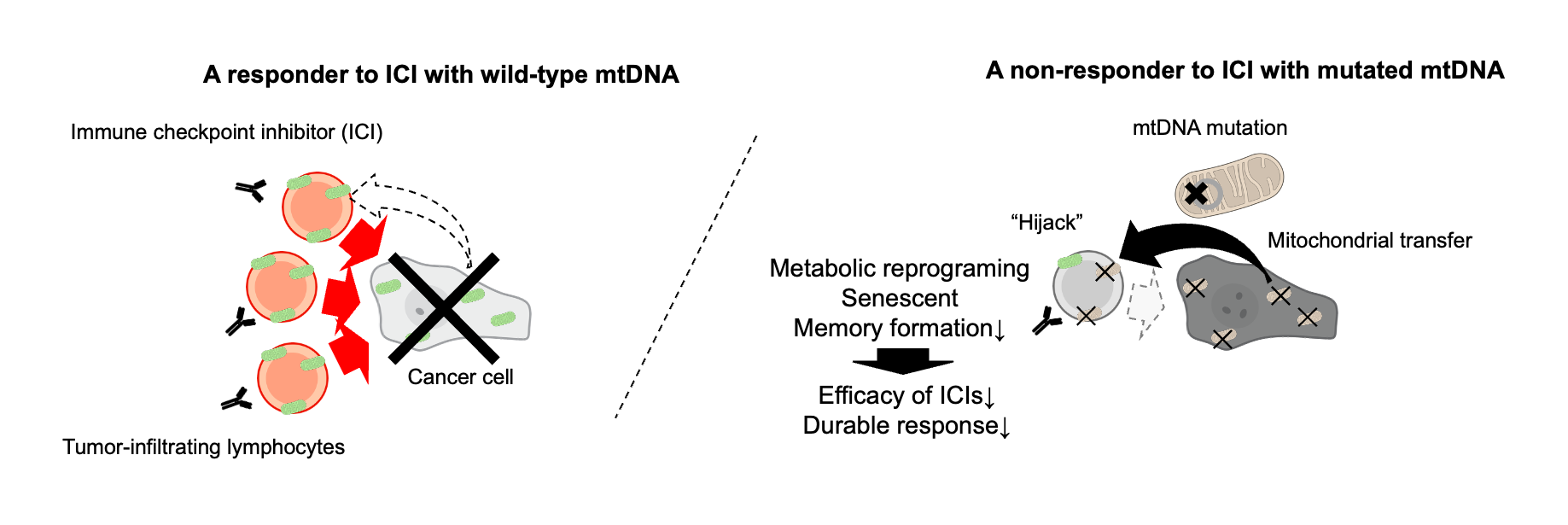
Modeling Human Mitochondrial Diseases, MitoWorld commentator Howy Jacobs describes a new paper by Hideki Ikeda of the Chiba Cancer Center Research Institute in Japan. The work breaks new ground by showing that the interaction of immune cells with cancer cells can facilitate a bidirectional mitochondrial exchange that simultaneously favours cancer cell viability and immune evasion.
In A New Twist on Treating Diseases: Pretzel Therapeutics, Inc., MitoWorld editor Gary Howard describes the interesting work by a new company focused on mitochondrial diseases. Pretzel Therapeutics hopes to restore cellular energetics to treat neurodegenerative and rare diseases associated with low mtDNA levels or to modify bioenergetics to treat obesity. One drug in clinical trials is a small-molecule activator that restored function to the most common mutants of the mtDNA polymerase, PolG.
In these Mito-Shorts, MitoWorld editor Gary Howard summarizes several recent academic publications about significant advances in understanding mitochondria in aging, related to synapses, balancing transcription and replication, producing energy and recycling damaged mitochondria.
In Treating Mitochondria to Slow Aging?, Mito-World editor Gary Howard summarizes a paper from the laboratory of Dr. Jennifer Trowbridge at The Jackson Laboratory published in Nature Communications. The paper describes how a genetic mutation that alters the function of mitochondria may provide a target for slowing aging.
In Identifying Mitochondrial Mutations, MitoWorld editor Gary Howard describes a new paper by Thiloka Ratnaike and Rita Horváth at the University of Cambridge. The work, published in the American Journal of Human Genetics, reports a new computational workflow that can identify mutations associated with rare mitochondrial diseases.
In “Beyond the Disease” MitoWorld partners with the United Mitochondrial Disease Foundation (UMDF) to highlight advances in mitochondrial science and the people responsible for them. www.MitoWorld.org is devoted to better public and medical understanding of underlying mitochondrial science in an effort to raise awareness of the field in order to attract greater funding for the pursuit of mitochondrial disease and dysfunction.
In The Mighty UCLA Mitochondria Core, MitoWorld editor Gary Howard writes about the unique Core research facility established at UCLA by Orian Shirihai, MD, PhD who runs a mitochondria and metabolism research lab that has opened up this unique three-labs-in-one Core facility to promote mitochondria research by UCLA researchers and doctors and outside faculty and companies.
In Mapping the Mitochondria in the Brain, MitoWorld editor Gary Howard writes about an unprecedented effort to look at the distribution of mitochondria throughout the brain. Conducted by Columbia professor Martin Picard, PhD, leader of the Mitochondria PsychoBiological Lab, a human brain was carved into thousands of cubes to make measurements. Michel Thiebaut de Shotten, PhD, a neuroanatomist from the CNRS in Bordeaux conducted the computational work.
In Modeling Human Mitochondrial Diseases MitoWorld editor Gary Howard writes about a paper published in Cell where a research group led by Agnel Sfeir at Memorial Sloan Kettering Cancer Center showed that gene editing can be used to engineer specific mtDNA mutations.
In Thin Air, MitoWorld editor Gary Howard writes about the important work in published in Cell from the laboratory of Isha Jain, Gladstone Institutes and the University of California, about a small molecule inhibitor that can control excess oxygen levels resulting from dysfunctional mitochondria.
In Navdeep S. Chandel: Moving Well Beyond “The Powerhouse of the Cell,” MitoWorld founder and organizer, writes about the careful mitochondrial research led by Lurie Prize winner Navdeep Chandel, PhD, who heads the Chandel Lab at Northwestern. Chandel is not just a leader in front-line mitochondrial research; he practices deep stewardship for the field with colleagues around the world.
In “Beyond the Disease” MitoWorld partners with the United Mitochondrial Disease Foundation (UMDF) to highlight advances in mitochondrial science and the people responsible for them. www.MitoWorld.org is devoted to better public and medical understanding of underlying mitochondrial science in an effort to raise awareness of the field in order to attract greater funding for the pursuit of mitochondrial disease and dysfunction.
In this MitoWorld “Spotlight,” Life Sciences reporter Daniel Levine interviews Dr. Craig Thompson of Memorial Sloan Kettering Cancer Center (MSKCC). Thompson’s lab focuses on the role that metabolic changes play in the origin and progression of cancer. Thompson led MSKCC as President and CEO from 2010 to 2022.
In Specialization among Mitochondria, MitoWorld editor Gary Howard writes about the discovery that Dr. Craig Thompson of Memorial Sloan Kettering Cancer Center and his team made about a new form of mitochondria. The discovery opens up even more properties and complexities of mitochondria.
In Mitochondria and Diabetes, MitoWorld editor Gary Howard writes about the research of a University of Michigan team led by Scott Soleimanpour, MD and Emily M. Walker, PhD. The team is exploring the connection between diabetes and mitochondria that is prevalent in rising levels of Type 2 Diabetes.
In It Takes a Village, MitoWorld editor Gary Howard writes about new work from the Lab of Aleksandra Filipovska at the University of West Australia, which examines the supporting interactions of the organelles and messengers that support mitochondrial functions. This complex interplay of cellular activity is necessary to fully understand mitochondria.
In Fixing Mitochondria, MitoWorld editor Gary Howard writes about the work of University of Miami researcher Carlos Moraes, which explores the complexities and insights from experiments
to affect mitochondrial DNA (mtDNA). Moraes lab looks deeply into the potential of mtDNA editing and into interactions with nuclear DNA (nDNA).
In “Beyond the Disease” MitoWorld partners with the United Mitochondrial Disease Foundation (UMDF) to highlight advances in mitochondrial science and the people responsible for them. www.MitoWorld.org is devoted to better public and medical understanding of underlying mitochondrial science in an effort to raise awareness of the field in order to attract greater funding for the pursuit of mitochondrial disease and dysfunction.
Surprise finding reveals mitochondrial ‘energy factories’ come in two different types, published in Nature, provides an interview with world-class researcher Craig Thompson of the Memorial Sloan Kettering Cancer Center. Thompson and team discovered that mitochondria specialize into two distinct classes in times of starvation.
In “Jumping Numts“, published in Scientific American, Columbia’s Martin Picard and colleagues explore for the first time how mitochondrial DNA (mtDNA) can be transmitted and integrated into nuclear DNA (nDNA) with potentially ill effects.
“Great Balls of Fire,” published in the FEBS Journal, investigates the temperature of mitochondria in cells, which is considerably higher than the surrounding cell. Lead author Howy Jacobs of Tampere University, Finland, is interviewed [Link] by MitoWorld editor, Gary Howard.
In this MitoWorld “Spotlight,” Life Sciences reporter Daniel Levine interviews Navdeep Chandel, PhD, David W. Cugell Professor of Medicine, Biochemistry, and Molecular Genetics at Northwestern University, about how the field of mitochondrial sciences is evolving and the need for greater investment to unlock treatments.
Creating the accepted language of mitochondrial transfer and transplantation is contained in a Consensus Statement published in Nature Metabolism, January 16, 2024, entitled, “Recommendations for mitochondria transfer and transplantation nomenclature and characterization.” Dr. Jon Brestoff of Washington University School of Medicine in St. Louis, and co-chair Keshav Singh, Department of Genetics, University of Alabama at Birmingham, led a team of 31 investigators from 13 countries to an agreement on recommended language to describe the rising field of naturally occurring mitochondria transfer between cells and external transplantation of mitochondria into cells, tissue and organs. Dr. Brestoff said, “The purpose of this article was to bring together experts in mitochondria transfer and transplantation and on mitochondria biology from around the world to make recommendations about terminology and characterization standards for the field’s benefit.”